


 Shopping cart


Hand-forged historical items for LARP and Viking or medieval re-enactment.
Here you can find all hand-forged goods from our medieval online shop at a glance.
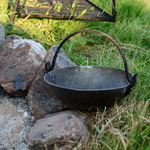
In the medieval online shop of PERA PERIS - House of History - we offer you a large selection of forged medieval goods made of iron and steel
In addition to hand-forged camp equipment and a large selection of knives and blades. We also offer many forged items inspired by historical models from the Viking Age and the Middle Ages.
You can also find nails, S-hooks, fire strikers, candleholders, hinges and many more steel and iron products after models from ancient periods.
You are sure to find something suitable for your historical equipment here.
Retailers for LARP or medieval re-enactment are welcome to register for our medieval wholesale store.
Products
show 1 to 126 (out of a total of 343 articles)


The Iron Revolution: From a Prestige Item to an Everyday Metal
The oldest archaeological evidence of forged iron products dates back to around 5,000 years ago (mostly made from meteorite iron). The systematic smelting of ores began in the Middle East around 3,500 years ago. In Central Europe and the North, the Iron Age culture became established around 2,800 years ago (c. 800 BC) and has continuously shaped our technological development ever since.
The transition from the Bronze Age to the Iron Age (c. 800 BC) represents a technological turning point. Whilst bronze was cast, iron products had to be forged under intense heat. Archaeological finds show that iron was initially treated almost like a precious metal before it became the primary material for tools, weapons and architectural elements through the exploitation of local bog iron ore deposits.
The emergence of forged goods marks one of the most significant turning points in the history of Central Europe and Scandinavia. With the mastery of iron smelting, not only warfare but also daily life underwent a fundamental transformation, as forged iron, unlike bronze, offered a previously unknown hardness and availability.
The Celts as pioneers of the art of smithing
During the La Tène period (c. 450–15 BC), the Celts achieved a mastery of ironworking that set standards across Europe. Sites such as the oppidum at Manching (Bavaria) have yielded enormous quantities of forged iron products – ranging from massive wheel rims for chariots to highly specialised hand tools such as pliers, files and scythes.
Particularly impressive are the so-called ‘La Tène iron swords’, which, thanks to steel refining techniques (folding the metal), possessed a flexibility and sharpness that was often superior to Roman blades. The Celts also set standards in the field of domestic technology: forged iron door locks and keys found in Celtic settlements attest to an early need for security and private property.
Roman mass production and Germanic traditions
With the Roman expansion into Central Europe, iron production became industrialised. Huge smithies (fabricae) sprang up in the provinces. Finds from the Limes forts, such as Saalburg or Carnuntum, reveal an impressive standardisation of forged nails, tent pegs and engineering tools.
The free Germanic peoples in the north, on the other hand, developed their own highly regarded tradition of welded steel production. Sites such as the bog at Illerup Ådal (Denmark) have preserved thousands of iron spearheads and swords. These weapons were often meticulously detailed and authentically marked with runes or smith’s marks, bearing witness to the deep ritual significance of forged iron, which was often rendered unusable and sunk as an offering following victorious battles.
The Viking Age: Damascus steel and shipbuilding
During the Viking Age (8th–11th centuries), the art of blacksmithing reached new heights in Scandinavia. Iron products formed the backbone of Viking expansion. Without the forged ship nails (clinker nails), as seen in the ship finds from Oseberg or Roskilde, the construction of the legendary longships would have been impossible.
A technological masterpiece of this era was the variegated Damascus steel (pattern control during forging). By forging different types of iron and steel together, blades with a characteristic grain were produced that were both extremely hard and elastic. Forge sites in trading centres such as Haithabu also show that iron was ubiquitous in everyday life: skewers, scissors, axes and padlocks were standard equipment in every household.
Medieval urban culture and the craft of blacksmithing
After the year 1000 AD, ironworking was revolutionised by the introduction of water-powered hammer mills. In medieval cities such as Nuremberg or Prague, blacksmiths formed the backbone of urban industry. Archaeological excavations in old towns regularly uncover forged architectural fittings, window grilles and tools that made the rapid architectural development of the Middle Ages possible.
It is particularly in the realm of armouries and sacred architecture that we find masterpieces of the blacksmith’s art. Iron products such as artistically decorated grave grilles or solid fittings for church doors demonstrate that, in the Middle Ages, iron was no longer merely functional but also a medium for high artistic standards. Specialisation into blacksmiths, nail smiths and cutlers led to unprecedented quality assurance within the guilds.


