


 Shopping cart


Historical replicas from the Antiquity to the Middle Ages in 925 sterling silver.
Here you can find the entire range of historical silver jewellery in our shop at a glance.
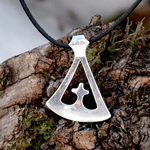
In our medieval re-enactment shop, you can buy historical silver jewellery and authentic replicas made of 925 sterling silver, which have been manufactured true to detail according to original models from antiquity and the Middle Ages. In particular, we offer Celtic jewellery and replicas of jewellery from the Viking Age. In addition to a wide range of brooches and clasps, you will also find historical bracelets, finger rings and pendants made from real silver that are authentically crafted from historical finds. You are sure to find the right silver jewellery for your outfit here.
Continue ...
Retailers for LARP or medieval re-enactment are welcome to register for our medieval wholesale store.
Products
show 1 to 126 (out of a total of 890 articles)


Jewellery based on models from antiquity, the Viking Age and the Middle Ages.
Historical silver jewellery at Pera Peris
In the PERA PERIS online shop, you can buy a large selection of silver jewellery, detailed replicas of historical jewellery from the history of mankind, from the time of the Celts and Romans, through the Viking Age to the late Middle Ages.
Whether in early antiquity or the late Middle Ages, in every past era of human history, both men and women wore silver jewellery for decoration and as a sign of their wealth.However, silver jewellery not only served our ancestors to emphasise their status in society, it also usually had a very practical significance. Silver jewellery was often used in the form of a garment clasp, a so-called fibula, which held the garment together.
But silver jewellery was also frequently used in the form of magical pendants and amulets to serve as protection against evil forces or to ensure the goodwill of the gods.In our online shop for medieval re-enactment, you will therefore find both authentic replicas of brooches made of real silver and reproductions of silver amulets, especially from the Viking Age, from which a large number of pieces of jewellery have been preserved.
But you can also buy other historical silver jewellery here, of course. In addition to finger rings, our shop also stocks bracelets, torques and earrings made of genuine 925 silver.
If you are looking for something a little less expensive, all of our silver jewellery is also available in high-quality bronze or genuine silver-plated. Our jewellery is coated with an extra-thick layer of silver up to 10 mg thick.
In addition, most of our silver jewellery that is worn directly on the skin, such as bangles and rings, is coated with a special tarnish protection. This protection ensures that the silver does not oxidise and darken so easily when in contact with the skin. This means you can enjoy your silver jewellery for a long time to come.
What is sterling silver?
Genuine silver jewellery is usually made from 925 silver, also known as sterling silver. This is an alloy, as jewellery made from pure silver would be too soft for everyday use.
The number 925 indicates the proportion of pure silver in parts per thousand used in the piece of jewellery. The remaining 7.5% consists of other metals, mostly copper, nickel, zinc or other compounds. However, the fineness is always 925/1000.
Although sterling silver is significantly more durable than pure silver, the additional metals make the alloy more susceptible to tarnishing, as these metals react with oxygen and other elements in the air. For this reason, silver jewellery that is worn on the skin often comes with an additional tarnish protection to prevent oxidation.
Today, silver jewellery is always understood to mean jewellery made of 925 sterling silver, and all the jewellery in our reenactment shop is made from this high-quality silver alloy.
However, historical silver jewellery can be understood to mean any piece of jewellery with a relatively high silver content, not just sterling silver jewellery, as our ancestors would not have adhered to today's standards.
It may be that original historical jewellery made of silver simply used any alloys that contained lead, antimony and other additives that made pure silver more resistant to everyday use.
Silver jewellery in early antiquity
A veritable jewellery industry emerged in early antiquity among the Egyptians around 5000 years ago, and even then, gold was considered the most precious and valuable metal for jewellery making alongside silver.
Nevertheless, jewellery in ancient times was made more often from silver than from gold, with less precious metals naturally being more common for the masses, such as copper first and then, from the Bronze Age onwards, bronze jewellery.
Silver jewellery in ancient times consisted primarily of cloak pins, known as fibulae, which were necessary for fastening clothing for everyone, as buttons did not yet exist at that time.
Nevertheless, in addition to fibulae and brooches, neck rings, bracelets and finger rings were also made of silver, with historical silver jewellery often decorated with precious gemstones.
Silver jewellery among the Romans
The Romans also used their silver jewellery not only for decorative or practical purposes, but also to show their wealth and status in Roman society, and to protect themselves from evil forces.
Originally, Roman decorum dictated that a male citizen of Rome should wear only a fibula and a single ring as jewellery, regardless of whether it was made of bronze, silver or gold.
However, over time, it became customary in Roman society to wear several rings. Otherwise, Roman men hardly wore any conspicuous silver jewellery.
Roman women, on the other hand, were hardly any different from women of other centuries and loved all kinds of silver jewellery. Here, too, the indispensable fibulae were at the forefront, followed by finger rings (anuli) and earrings (inaures). Bracelets (armillae) and upper arm bracelets (spintherae) as well as amulets (pendentes) and necklaces (moniliae) made of silver were also popular with Roman women.
Silver jewellery of the Vikings
Silver jewellery certainly had a similar significance in the Viking era as in previous eras, and in addition to its practical function, it was primarily intended to express wealth and status.
Even today, a remarkable amount of silver jewellery is still being recovered from Viking graves. The Viking Age can be described as a veritable silver age, as extensive trade contacts and raids brought immeasurable quantities of silver to the north, where it was made into jewellery.
Although most Viking jewellery was usually made of bronze, silver-plated or gold-plated bronze was not uncommon. Nevertheless, pure silver jewellery was very widespread among the Vikings.
As in ancient times, the brooch was also extremely widespread among the Vikings as an indispensable garment clasp and came in a variety of different forms. Depending on the intended use and cultural area, a distinction is made between horseshoe brooches, disc brooches, cloverleaf brooches, equal-armed brooches, box brooches, animal head brooches and oval brooches.
Women wore so-called bow brooches below their shoulders, which were also known as oval brooches or turtle brooches due to their shape and were used to fasten the apron to the garment.
Similarly, only women wore a so-called cloverleaf brooch, which fastened the neckline of the shirt or a cape in the middle of the chest. Most of these brooches were made of bronze, but there were also many Viking brooches made of real silver.
Men in the Viking Age also wore not only bronze jewellery, but often precious silver jewellery as well. To fasten their cloaks, they used a so-called horseshoe brooch, which, as the name suggests, was shaped like a horseshoe. Silver bracelets and neck rings were also worn by Viking men.
Other Viking-era silver jewellery included finger rings, amulets and pendants, which have been found in large numbers in Viking graves. Even Arab coins made of silver were sometimes worn by the Vikings as jewellery around the neck or on a chain.
Medieval silver jewellery
In the Middle Ages, silver jewellery was not only used for decorative or representative purposes, but also served as an everyday object for fastening clothing, as is clearly demonstrated by the large number of finds and illustrations of historical garment clasps from the High and Late Middle Ages.
Among the Germanic tribes of the Migration Period and the early Middle Ages, such as the Alemanni or Franks, silver jewellery also served as cash, as the Germanic tribes used their jewellery made of precious metals such as silver and gold as a substitute for money. Such jewellery is referred to as hack silver, as it was simply chopped into the required amount and weighed instead of coins.
Although jewellery such as finger rings, bracelets and garment clasps in the early Middle Ages were mostly made of bronze and silver, in the 11th and 12th centuries, jewellery made of brass became increasingly popular alongside silver and bronze jewellery. However, in the High Middle Ages, the jewellery of the nobility and the wealthy was often made of precious metals and, in many cases, richly set with precious stones.
While the noblewomen of the 10th century still adorned themselves with lavish silver jewellery such as brooches, necklaces and finger rings, the 11th century saw the addition of the so-called schapel, a delicate headband worn over the hair or a headscarf.
In the 12th century, silver jewellery and jewellery in general became less and less popular and gradually disappeared from late medieval fashion. Instead, increasingly elaborate buckles and decorative rows of buttons on clothing gained in importance and replaced the decorative and representative function of earlier silver jewellery.
Historical silver jewellery at PERA PERIS
We hope you enjoyed this little excursus on historical silver jewellery and that you will find a piece of silver jewellery to suit your taste in our shop.
At PERA PERIS – House of History, you will find replicas of historical silver jewellery suitable for your era. Here you can buy detailed replicas of antique garment fasteners and Viking-era fibulae, as well as medieval brooches and clasp pins, and you will also find many other pieces of jewellery made of 925 sterling silver based on archaeological finds.
In our reenactment shop, we also offer authentic hairpins and cloak pins made of bronze and silver based on original models from antiquity to the Middle Ages, as well as replicas of historical bracelets, finger rings and earrings.
Authentic pendants and magical amulets, such as replicas of Celtic torques and Viking-era neck rings, complement our range of historical silver jewellery.
You are sure to find the right silver jewellery here for a stylish and authentic representation of your era.


