


 Shopping cart


Bronze jewellery like historical brooches, bangles, pendants and finger rings.
Here you can find all historical bronze jewellery and other replicas at a glance in our shop.
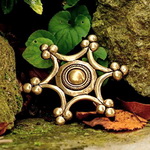 Here you can buy historical bronze jewellery and other authentic bronze replicas that have been made true to detail according to historical models from antiquity and the Middle Ages. We offer Celtic jewellery and authentic pieces of jewellery from the Viking Age in particular. In our online shop, you will not only find a large selection of bronze brooches and clasps, but also authentic replicas of historical bracelets, finger rings and pendants based on historical finds. You are sure to find the right bronze jewellery for your historical outfit here.
 Continue ...
Retailers for LARP or medieval re-enactment are welcome to register for our medieval wholesale store.
Products
show 1 to 126 (out of a total of 1067 articles)


About historical bronze jewellery
The history of bronze jewellery in Central Europe and Scandinavia is a tale of craftsmanship, social status and cultural exchange. From the first alloys of the Early Bronze Age to the ornate belt buckles of the late Middle Ages, bronze remained the material of choice for jewellery that was functional, aesthetic and symbolic, and held significance for humanity throughout the millennia.
The Bronze Age: The Age of Splendour
During the Central European Bronze Age (c. 2200–800 BC), bronze became the most important material for prestige objects. Archaeological finds from burial mounds reveal a preference for substantial jewellery. Typical of this era are spiral jewellery, heavy neck collars and imposing brooches as well as garment pins. In Northern Europe, metalwork reached a high point with objects such as the Trundholm Sun Chariot or the richly decorated lurs. Here, bronze jewellery was often linked to religious symbols such as ships or sun motifs and reflected a hierarchical society.
The Iron Age and Roman influences
With the onset of the Iron Age (from around 800 BC), bronze lost its dominance in tool-making but remained indispensable for jewellery. Following the Hallstatt period, the Celts in Central Europe developed the La Tène style, characterised by flowing, organic forms. With the expansion of the Roman Empire, Mediterranean aesthetics and Germanic traditions came into contact. The Romans introduced techniques such as enamelling and filigree work. Germanic tribes adapted these influences and created their own forms of brooches, which often served as status symbols and tribal insignia.
Viking bronze jewellery
During the Migration Period and the subsequent Viking Age (c. 793–1066 AD), bronze working in Northern Europe reached new heights. Viking-era bronze jewellery is particularly characterised by the animal style, in which abstract mythical creatures are depicted in complex interlacing patterns. Particularly characteristic of Viking bronze jewellery are the so-called ‘turtle brooches’, which were worn in pairs to fasten women’s skirts. These pieces were often fire-gilded to make the bronze shine like pure gold. In addition, however, the Vikings also wore bronze jewellery in the form of pendants, fittings and many different types of garment clasps.
Bronze in the transition to the Middle Ages
With Christianisation and the transition to the High Middle Ages, jewellery styles changed. Whilst bronze was often replaced by silver in the sacred sphere for crosses and reliquaries, it remained the material of choice for the common people in everyday life, alongside the increasing use of brass. Bronze buckles, strap ends and small ring brooches are therefore common finds in medieval settlements, whereas jewellery made of pure bronze was rarely encountered. The motifs became simpler, yet the craftsmanship of the casting techniques remained high. Through simplified processes, bronze enabled broad sections of the population to be part of the fashion trends of their time, which were expressed particularly in belt buckles and fittings rather than in magnificent garment clasps.
Across the millennia, these finds show us how closely the peoples of Central and Northern Europe were connected through trade routes and technological transfer. Bronze was far more than just a metal – it was a medium for identity and faith. Thus, bronze jewellery has survived the passage of time to the present day.


