


 Shopping cart


Hery you can buy Roman brooches and historical fibula replicas of the Antiquity
Authentic fibula replicas and true-to-detail brooches for Roman re-enactment.Continue ...
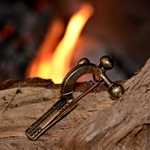 In our historical mail-order shop, we offer you a wide selection of authentic fibula replicas and Roman brooches. You can buy faithfully crafted brooches from the Roman period, which are made from high-quality bronze casting and are also available in real silver-plated or 925 sterling silver. Brooches and Fibulae were an indispensable part of the garments in Roman times. Even today, such Roman jewellery is indispensable for historically correct Roman re-enactment and as well a stylish jewellery for everyday life.
Continue ...
Retailers for LARP or medieval re-enactment are welcome to register for our medieval wholesale store.
Products
show 1 to 24 (out of a total of 24 articles)
Dealers for museum supplies, medieval and Viking re-enactment or LARP are cordially invited to register as retailer for wholesale in Pera Peri's medieval shop. We guarantee the best quality at good prices with short delivery times!
Roman brooches
 Roman garment clasps at Pera Peris – House of History
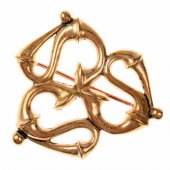 If you are looking for an authentic replica of a Roman brooch for your costume, then you have come to the right place in our online shop.
At Pera Peris – House of History, you can purchase authentic replicas of Roman fibulae, which have been manufactured in accordance with historical models from antiquity.
Our brooches are made from high-quality jewellery bronze and feature a particularly beautiful golden-yellow bronze alloy. You can also purchase our Roman brooches in genuine silver-plated, whereby our brooches are coated with an extra-strong layer of silver of up to 10 mg.
In addition, many of our Roman fibulae and brooches are coated with a special tarnish protection, which ensures that the metal does not oxidise and darken so easily and that the silver does not turn black. This means you can be sure to enjoy your fibula replicas for a long time to come.
 Roman jewellery and fibula customs
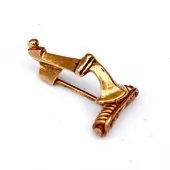 During the Roman Republic, propriety dictated that a man should wear only a single ring and a fibula as jewellery.
Ideally, Roman men wore no other jewellery. At most, a military decoration earned in the service of the Roman legion might adorn his chest.
The situation was somewhat different for Roman women, who were allowed to adorn themselves with lavish jewellery and precious fibulae. However, overly expensive jewellery was not well regarded in the early days of the Roman Empire, as after the Second Punic War, the weight of gold jewellery was limited to half an ounce per woman.
But the Roman matrons took to the streets and demonstrated together for the freedom to own as much jewellery as they wanted. And so, in 195 BC, the so-called Lex Oppia was finally repealed and the Roman jewellery trade experienced a remarkable heyday.
However, Roman jewellery was not only intended for decorative use; it was also meant to show the wealth of its owner and, in the form of a fibula, fulfilled a practical function, because without a garment clasp, no item of clothing could remain in place in Roman times.
For centuries, the Romans used brooches in various forms to fasten their clothing, and archaeologists therefore often use them as an important clue to accurately assess Roman artefacts in their historical context, as the design of brooches was always very much dependent on the tastes of the time.
 Types of Roman fibulae
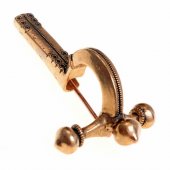 Early Roman fibulae were actually little more than large safety pins used to drape the abundance of fabric in garments. Fibulae were already in use in the Bronze Age and spread throughout most of Europe among the Celtic, Roman and Germanic peoples.
The name fibula comes from the Latin word fibula for the fibula bone, as the Romans originally made their dress pins from thin bones. When garment pins were later made of metal, the Romans simply retained the original name and later transferred it to garment clasps.
Among the Romans, fibulae were worn by both men and women, with the latter using them in pairs to fasten the peblos, as women's clothing was called in ancient times. The cloaks of legionaries and the necklines of tunics were also fastened with fibulae.
In addition to their functional character, fibulae naturally also had a decorative function for the Romans and, due to their design and material properties, could indicate the rank, status and wealth of their owner.
The fibulae of ordinary Romans were therefore often made of simple iron wire, while those of the wealthy could also be made of bronze or silver, and the fibulae of the rich could even be made of gold and richly decorated.
The Romans also had brooches with components made of glass, precious stones and coral, and silver inlays were not uncommon. In addition, Roman brooches could even be decorated with blessings or symbols intended to protect the wearer from misfortune or ward off harm.
Depending on their design and period, the various types of Roman brooches are given different names: archaeologists distinguish between the following Roman brooches:
Trumpet brooch, Certosa brooch, Pelta brooch, Ausica brooch, volute brooch, bird brooch, anchor brooch, omega brooch, bent brooch, onion knob brooch, wing brooch, swastika brooch, hinge brooch, collar brooch, double knob brooch, Draonesque brooch, bow brooch, disc brooch, knee brooch, eye brooch, soldier brooch and several more...
We hope you enjoyed this little excursion into the world of Roman fibulae and that you might find a replica of a Roman brooch that you would like to wear with your historical costume or as everyday jewellery.


