


 Shopping cart


Authentic Viking brooches after historical models
Here you can buy detailed replicas of authentic Viking brooches and historical cloak clasps.Continue ...
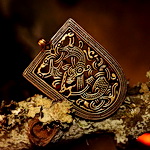 Here you can buy authentic Viking brooches which were made according to historical finds of the Viking Age. Our Viking brooches are made of high-quality bronze casting and as well available in real silver. Brooches were an indispensable part of historical garments in the Viking Age and, depending on their size, were used to close the neckline of a shirt or a cape. Perhaps you too will find a suitable Viking brooch in our Viking mail-order shop that you would like to buy for your authentic garb or as jewellery for everyday life.
Continue ...
Retailers for LARP or medieval re-enactment are welcome to register for our medieval wholesale store.
Products
show 1 to 20 (out of a total of 20 articles)
Dealers for museum supplies, medieval and Viking re-enactment or LARP are cordially invited to register as retailer for wholesale in Pera Peri's medieval shop. We guarantee the best quality at good prices with short delivery times!
Viking brooches
 Viking-era brooches in the Pera Peris range
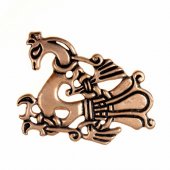 In our medieval shop, alongside various fibulae, you can also choose from an extensive range of Viking jewellery. Among other things, you can also buy a whole range of replicas of Viking brooches from us.
During the Viking Age, brooches were worn by both women and men and, just like disc fibulae, were used to fasten the neckline of a tunic or dress, or, in larger versions, served as a clasp for a cloak.
The Viking brooches in our collection are crafted from high-quality jewellery bronze with an exceptionally beautiful yellow-gold hue, closely following historical Viking-era models, and are also available with a genuine silver plating.
For our Viking jewellery, we use a particularly thick silver plating of up to 10 micrometres.
Many of our Viking brooches are also treated with a special anti-tarnish coating, which ensures that the shiny bronze alloy or silver plating does not oxidise and thus darken unattractively.
This means you will be able to enjoy your Viking brooch for a long time to come.
Our authentic reproductions of Viking-era brooches are based on archaeological finds from various periods of the Viking Age, discovered in Scandinavia or the Baltic region, or originating from excavations in England or Russia.
 Various brooches from the Viking Age
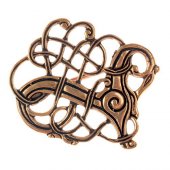 A distinctive form of Viking-era jewellery are filigree brooches in the so-called Urn style, which feature slender serpentine creatures elegantly intertwined in filigree openwork and which, much like the disc brooches, were presumably also used to fasten a shirt neckline.
As an alternative to brooches and disc brooches, the Vikings also reworked book fittings from Christian monasteries into brooches.
These fittings were often adorned with plant motifs such as palmettes and acanthus leaves and originated from the Carolingian workshops of the Frankish Empire or Anglo-Saxon workshops.
Although the floral artistic design of their Christian neighbours was quite atypical for Scandinavian art, some Viking women apparently took pleasure in wearing the looted book fittings, reworked into brooches, on their dresses.
The situation was similar with the cloverleaf brooch, which was originally made from cloverleaf-shaped strap fittings of Frankish origin that formed part of the armour pendants of Frankish knights in the Carolingian period.
Like many looted book fittings, the Carolingian strap dividers were also fitted with a pin and clasp by Viking goldsmiths and transformed into a brooch.
This cloverleaf-shaped brooch soon became very popular among Viking-era women and eventually developed into a typical Viking piece of jewellery.
For the Vikings soon began crafting the clover-leaf brooches in their own Scandinavian style, designing them with knot motifs and depictions of predatory animals in the Scandinavian style rather than the foreign floral motifs.
Another Viking brooch that was quite typical of Viking-era jewellery is the so-called equilateral brooch, or equilateral fibula.
Unlike most brooches of the Viking Age, this brooch was elongated in shape and had two identically designed ‘wings’, which could be adorned with sculpted animal motifs, though more often they were executed in simple incised carving.
The Vikings also had bird-shaped brooches and diamond-shaped brooches, known as diamond brooches, though these were generally less common than disc brooches and cloverleaf brooches.
Typical of all Viking brooches, however, was that they were made of bronze or silver and worn in the centre of the chest to fasten the neckline of a shirt, a cape or a caftan.
 Disc brooches of the Viking Age
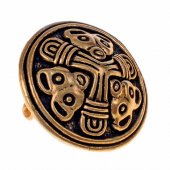 Disc brooches were a very popular and widespread form of brooch during the Viking Age. The disc brooch was shaped like a round disc and is therefore often also referred to as a round brooch.
This brooch served primarily to fasten the neckline of a garment, but in larger versions could also serve as a clasp for a cloak.
The round fibula was used as a brooch throughout the Viking settlement area by both men and women and could reach sizes of 2 to 6 cm.
It was usually cast in bronze and was often decorated with openwork foliage and mythical creatures such as dragons and snakes, or adorned with figurative depictions of animals.
Particularly impressive are the Viking brooches of the eastern type, which are found mainly in archaeological finds in Russia and Eastern Scandinavia, and which were crafted using the delicate granulation technique, whereby the finest beads and small spheres were soldered onto a base material.
We hope you enjoyed this brief digression on Viking-era brooches and we have been able to share a little knowledge with you. Perhaps you will find a beautiful Viking brooch in our medieval shop that you would like to purchase for historical re-enactment or as jewellery for everyday wear.


