


 Shopping cart


Medieval jewellery replicas. Buy authentic ring brooches of the Middle Ages
Here you can buy faithfully crafted medieval brooch replicas based on historical models.Continue ...
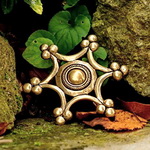 In our medieval shop, you will find authentic replicas of high medieval brooches and late medieval cloak clasps, faithfully crafted according to original finds. In addition to disc brooches with enamel, also so-called annular brooches were particularly widespread in the High Middle Ages to close the neckline of a shirt. In the category "Early Medieval brooches" you can also buy replicas of medieval bow brooches with inlays of cloisonné. You are sure to find an authentic medieval brooch or dress clasp for your garb or as a stylish jewellery for everyday life.
Continue ...
Retailers for LARP or medieval re-enactment are welcome to register for our medieval wholesale store.
Products
show 1 to 16 (out of a total of 16 articles)
Dealers for museum supplies, medieval and Viking re-enactment or LARP are cordially invited to register as retailer for wholesale in Pera Peri's medieval shop. We guarantee the best quality at good prices with short delivery times!
The wide world of medieval brooches and dreass clasps
Medieval brooches from the Pera Peris range
The jewellery collection at Pera Peris – House of History includes detailed replicas of medieval brooches and high-quality reproductions of brooches from various periods of the Middle Ages.
Our brooches and garment clasps are made from high-quality jewellery bronze and feature a particularly beautiful, golden-yellow bronze alloy. You can also purchase our medieval brooches in silver-plated, whereby we coat our jewellery with an extra-strong layer of silver of up to 10 mg.
In addition, some of our medieval jewellery is treated with a special tarnish protection, which ensures that the bronze does not oxidise and darken or the silver turn black, so that you can enjoy your brooches for a long time.
Interesting facts about medieval brooches
Brooches have been a significant part of archaeological finds since the Bronze Age, as they were used to fasten clothing for thousands of years.
The Middle Ages were the last era in which brooches were still commonly used as garment fasteners in some areas of Europe. Various types of garment clasps also appeared during this period.
The most important examples of medieval garment fasteners are the disc brooch and the bow brooch. There are also special forms such as the early medieval S-brooch, the animal brooch and eagle brooch or bird brooch, as well as the ring brooch, which evolved into the annular brooch in the High Middle Ages, and the late medieval agraffe.
In Northern Europe, after the turmoil of the Migration Period, completely different forms of brooches emerged in the course of the 7th century than on the continent or in England, which had no counterparts among the continental peoples and remained exclusively limited to the north.
Particularly noteworthy here are various forms of ring brooches, as well as so-called trefoil brooches, oval tortoise brooches, box brooches and, towards the end of the Viking Age, openwork brooches, most of which were decorated in a figurative animal style or with intertwined knot motifs.
While disc brooches and bow brooches were still very often worn together as part of the four-brooch costume during the Merovingian period, very few garment clasps are in circulation from the subsequent Carolingian period compared to Northern Europe. The most common type of brooch worn here was still the disc brooch in various forms.
The medieval disc brooch
Although buttons were not unknown in the early Middle Ages, people of that time primarily fastened their garments with garment clasps or brooches, which make up a large part of the medieval jewellery found in archaeological finds.
Disc brooches were particularly common in the Middle Ages, as were plate brooches, which were basically round or asymmetrical, flat bodies with a needle holder and a needle rest on the opposite side.
Disc brooches were already very common in Roman times and could take any conceivable form, including not only round discs, but also ships, animals, swastikas and openwork trumpet shapes.
At the beginning of the Early Middle Ages, the disc brooch partially replaced the previously common bow brooch, until the latter gradually disappeared from traditional costume at the turn of the 6th to 7th century and was replaced by a large disc brooch.
These disc brooches, which were over 5 cm in size, were mainly associated with women's traditional dress in the early Middle Ages, but much smaller brooches were also used by men from the Carolingian period onwards.
However, the pin constructions were often so weak that in many cases they did not provide a secure fastening for clothing. Such brooches would have been more of a kind of devotional object, similar to today's stickers that are pinned to lapels.
In contrast to the brooches of antiquity, which actually served to hold clothing together and had correspondingly solid needle constructions, the medieval disc brooches from the 8th to 11th centuries apparently often served only as a form of identification within Christianity.
This is because many medieval brooches have some kind of shape or image with a Christian reference, be it a simple cross or an image of Jesus or a saint, or simply the depiction of an animal in a Christian context, such as a lamb or a lion.
To make the image stand out, medieval brooches were often enamelled in very colourful designs. Earlier disc brooches, on the other hand, were often inlaid with red almandine, whereas later ones could have filigree decorations using the granulation technique.
In the early Middle Ages, brooches were usually made of a copper alloy such as bronze, or sometimes of pure silver. Medieval garment fasteners could have gold-decorated inlays and gemstones, or be enamelled or inlaid, or even have a gold or silver sheet overlay.
In the Viking settlement of Haithabu, on the former border with the Frankish Empire, many brooches made of a tin-lead alloy were also found, which were inexpensive mass-produced items for the less affluent social classes.
While the earlier disc brooches were still solidly crafted, the later models of the 11th and 12th centuries developed into thin discs with filigree decorations or engraved patterns, some of which also featured inlays of precious stones. These brooches represent the transition to modern brooches, which only had a decorative function and were used without any functional connection to clothing.
Differnet types of medieval brooches
The equal-armed brooch is one of the earliest garment fasteners in the Middle Ages and consisted of two brooch plates connected by an arch, which could be either flat or decorated with incisions.
The rosette brooch is characterised by a larger or smaller number of rosette petals made of inlaid almandines surrounding the centre of the brooch. This garment clasp was particularly common in the Merovingian period and was replaced by other types of fibulae in the early Middle Ages.
In Merovingian bird fibulae, eagle fibulae and S-fibulae, the cell bars are often filled with almandine inlays, as in the rosette fibula. These cloak clasps were worn in the Alemannic four-brooch costume together with two bow brooches.
The rectangular brooch is a brooch in a rectangular shape, which often had slightly indented sides. It was manufactured using both pit enamel and cell enamel techniques and also occurred as cast brooches.
The flower brooch is a solid cast brooch that vaguely resembles a flower and usually has a raised enamel setting in the centre. Similar to this is the star brooch, which resembles a star and has a raised setting with a pearl in the centre.
The wheel brooch is not solidly cast, but has small openings in the plate and thus belongs to the so-called openwork brooches, whereby the openwork needle plate is surrounded by circles arranged around a raised setting in the centre.
The saint brooch is a garment clasp with a figurative representation of a saint, who was characterised by a corresponding mark above his head and was usually made using the pit enamel technique. In addition to simple saint brooches, so-called double saint brooches and angel brooches are also known.
The Agnus Dei brooch depicts the symbol of Jesus as the Easter lamb, which has been widespread in Christianity since ancient times and is thus a symbol of Christ's resurrection.
The cross brooch is a medieval brooch in the shape of a cross, which was manufactured as a cast brooch or as a cloisonné brooch and came in a variety of forms.
Different types of early medieval bow brooches
In the early Middle Ages, between the 5th and 7th centuries, bow brooches were part of Germanic women's clothing and were worn in pairs, one on top of the other, in the lap area of the dress in the so-called four-brooch costume. Two smaller brooches in the chest area complemented the four-brooch costume. In Scandinavia, some variants of the bow brooch even date back to the Viking Age.
Based on Ostrogothic models, bow brooches spread throughout the Germanic settlement area from the second half of the 5th century onwards.
The original East Germanic brooches were still made of sheet metal and consisted of two plates connected by a bow. Later garment clasps were cast from a single piece and were mostly made of bronze, but also silver, and were often gilded.
The earliest bow brooches were often decorated with gemstones set far apart, while later examples were decorated with almandines or glass using the cell technique. The latest of these garment clasps, however, often had only decorative inlay work.
Depending on the settlement area, medieval garment clasps can be divided into East Germanic, South Germanic and North Germanic bow brooches, each of which had its own characteristics.
The highest quality examples of craftsmanship can be found in the South Germanic region, whereas more degenerate forms tend to occur in the East Prussian areas.
In Scandinavia, five-knob brooches are completely absent, but in addition to bow brooches with rectangular head plates, typical three-knob brooches can also be found. In the north, there are also independent types of brooches, such as the back-knob brooch and the equal-arm brooch.
The individual types of medieval bow brooches
The three-knob brooch originated in the 5th century during the Migration Period from the South Russian metal sheet brooch, which was found in Italy and France, and was later made from solid cast metal.
Nevertheless, this type was not widely used.
Unlike the three-button brooch, the five-button brooch was comparatively widespread and occurred from Russia to France and from Italy to England. It is only not found in Scandinavia. The typical five-button brooch usually had a rhomboid base with an animal head at the end and was often decorated with almandines or glass enamel.
A late development of the five-knob brooch is the multi-knob brooch, which could have seven or more end knobs. In addition, in the early Middle Ages there were so-called bird-knob brooches, in which the end knobs of the brooch were designed in the shape of bird heads looking sideways. This garment clasp was particularly well known in Russia, Hungary, Germany, Switzerland and France.
With the end of the Merovingian period and a change in costume customs, the early medieval bow brooch also died out as a component of Germanic costume and was replaced by other forms of jewellery in the High Middle Ages.
Interesting facts about the medieval annular brooch
A special feature is the medieval Fürspange, also known as the annular brooch, a type of ring brooch that does not belong to the family of disc brooches and is more similar to a brooch, but occupies an important place among medieval brooches.
n the form of a closed ring or a rhombus, the annular brooch was often decorated with Christian texts or corresponding symbolism on the edge. Thise late medieval brooch was usually made of bronze or brass and was mainly used in the 13th and 14th centuries to fasten the neckline of medieval tunics and was worn by both men and women.
Many Fürspangen were often significantly smaller than 4 cm, often only 1 to 2 cm in size, and were probably used only for purely decorative purposes at the neckline.
We hope you enjoyed this little excursion into the world of brooches and pins of the Middle Ages, and that you may find one or two garment fasteners to suit your personal taste, which you would like to wear with your historical costume or as decorative jewellery in everyday life.


