


Retailers for LARP or medieval re-enactment are welcome to register for our medieval wholesale store.


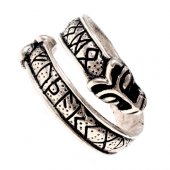
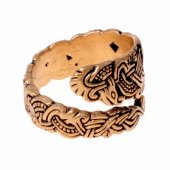
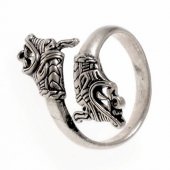
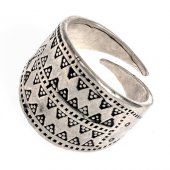
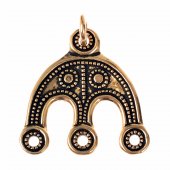
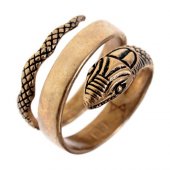


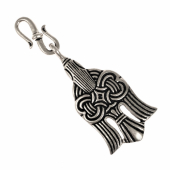

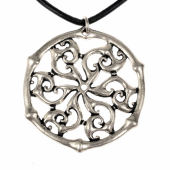
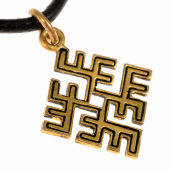
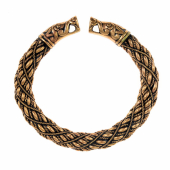


 Viking, medieval and antique jewellery.
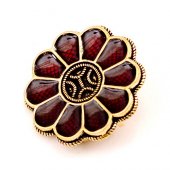 In the Pera Peris online shop, you can buy a wide selection of Viking jewellery as well as detailed replicas of Viking jewellery and reproductions of antique jewellery from the Celtic and Roman periods.
Whether in ancient times, the Viking era or the Middle Ages – in all eras, men and women alike wore a variety of jewellery.
Jewellery not only served decorative purposes for our ancestors, but often also had a practical function, e.g. as a garment clasp or as protection against evil forces or to ensure good luck.
Our Viking jewellery, as well as the replicas of medieval jewellery and most of the replicas of antique jewellery in our range, are made of high-quality bronze and are characterised by a particularly beautiful yellow-gold alloy. You can also buy our jewellery in real silver-plated. Our jewellery is coated with an extra-thick layer of silver of up to 10 mg.
In addition, most of our jewellery is treated with a special tarnish protection that ensures that the bronze does not oxidise and darken so easily and that the silver does not turn black. This means you will be able to enjoy your Viking jewellery or medieval jewellery for a long time to come.
In addition to classic jewellery made of high-quality bronze and silver-plated items such as rings, necklaces, bracelets, brooches and brooches, we also stock leather jewellery such as embossed bracelets, arm warmers and hair clips.
 What exactly is jewellery?
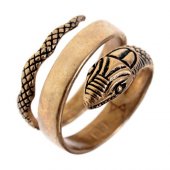 In the broadest sense, jewellery can simply be understood as an ornament, in a sense any effort to beautify or at least enhance the appearance, either for the joy of creative expression or to represent one's personal status and, in some cases, a higher income.
In a narrower sense, however, the term jewellery refers primarily to an object or painting that is subjectively perceived as beautiful, in particular ornaments visible on the human body and clothing in the form of rings, pearls, necklaces, bracelets, brooches, tiaras and other types of jewellery. In this sense, a tattoo can also be understood as jewellery.
 Jewellery in the Stone Age
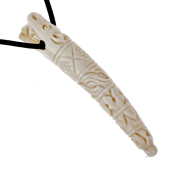 Cave paintings from the Stone Age reveal that even early humans had a need to adorn themselves.
Our ancestors decorated themselves with the teeth of their defeated enemies and wore them around their necks as trophies after a victorious battle.
Pearls were also already widespread. In Russia, for example, fur hats and cloaks decorated with over 4,000 pearls and belts decorated with 450 polar fox teeth were found in an early Stone Age grave. Pearls made of amber and jewellery made of shells and sea snails are also known from Stone Age finds.
Interestingly, the desire to wear jewellery seems to have spread simultaneously in Africa and Asia as well as in Australia and Europe.
One reason for this may well have been the increasing population density on Earth, which meant that population groups that had previously lived far apart now encountered each other more frequently – jewellery made it easy to identify a person's rank within a tribe or clan, so that even strangers knew who they were dealing with.
 Egyptian jewellery
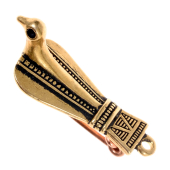 Deliberate jewellery production only began around 5000 years ago in ancient Egypt. Even then, gold in particular was considered the most precious and valuable material for jewellery making.
The aesthetic design of jewellery began in ancient times with the processing of various metals, initially copper and then, from the Bronze Age onwards, mainly bronze, gold and silver.
Jewellery in antiquity consisted mainly of brooches, known as fibulae, which were necessary for fastening clothing, but also bracelets, necklaces and rings. In addition to precious metals, gemstones were equally valued as adornments. Egyptian jewellery was generally quite delicate and not overly ornate.
Of all the civilised peoples of antiquity, the Egyptians were the most advanced in the processing of precious metals at that time and preferred the linear design of their architecture in the jewellery they produced.
 Roman jewellery
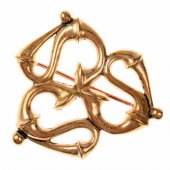 For the Romans, jewellery was not only for decorative purposes, but also served to display wealth or protect its owner in the form of an amulet.
In early Roman times, decorum dictated that a man should wear only a single ring as jewellery, in addition to a brooch.
However, it soon became customary to wear several rings. Otherwise, Roman men wore hardly any conspicuous jewellery. Only the chest and neck were sometimes adorned with military decorations earned in the service of the Roman legions.
But Roman women were no different from women of earlier or later centuries and were equally fond of all kinds of jewellery. These included, above all, the indispensable fibulae, but also finger rings (anuli) and earrings (inaures), as well as bracelets (armillae) and upper arm rings (spintherae) and, of course, pendants (pendentes) and necklaces (moniliae). Roman hairpins were also particularly important for styling the complicated updos of Roman women.
 Viking jewellery
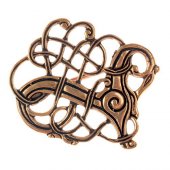 Jewellery was also very important during the Viking Age, and even today, a wide variety of jewellery from the Viking Age is still being recovered from graves, often small masterpieces full of creative dynamism and remarkable craftsmanship.
Viking jewellery was usually made of bronze, but silver-plated or gold-plated bronze and even pure silver were also used.
In particular, the so-called fibula, the indispensable garment clasp, came in a variety of forms.
Depending on their purpose and cultural area, a distinction is made between horseshoe brooches, disc brooches, cloverleaf brooches, equal-armed brooches, box brooches, animal head brooches and shell brooches, for example.
A distinction must be made between women's and men's jewellery, as the former was both decorative and practical, as well as gender-specific in nature.
For example, only women wore pairs of so-called bow brooches below their shoulders, which were also known as oval brooches, hump brooches or turtle brooches due to their shape and were used to fasten the apron to the garment.
Similarly, only women wore a so-called cloverleaf brooch, which fastened the neckline of the shirt or cape in the middle of the chest.
Viking men, on the other hand, fastened their cloaks with a so-called horseshoe brooch, which, as the name suggests, was shaped like a horseshoe. Chains and neck rings as well as bracelets and finger rings were also worn as jewellery by the Vikings.
 Jewellery in the Middle Ages
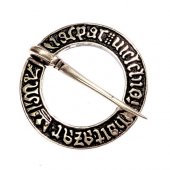 In the Middle Ages, jewellery often had not only a decorative and representative character, but also served as a functional object to fasten clothing, as impressively demonstrated by the large number of medieval cloak fasteners.
Among Germanic tribes such as the Bavarians, Alemanni, Franks and Thuringians, jewellery also fulfilled another function in the early Middle Ages, as jewellery made of precious metals such as silver and gold was also used as a substitute for money in barter transactions. Such jewellery is referred to as hack silver.
While finger rings, bracelets and brooches were mostly made of bronze and silver in the early Middle Ages among the Germanic tribes and Vikings, people in the 11th and 12th centuries increasingly wore jewellery made of brass.
However, in the High Middle Ages, the jewellery of nobles and wealthy citizens was often made of precious metals and frequently decorated with precious stones.
The noble ladies of the 11th century still wore plenty of jewellery such as brooches, necklaces and rings, as well as the so-called schapel, a narrow headband. In the 12th century, however, the general use of jewellery declined and it eventually became less important in late medieval fashion.
Here, increasingly elaborate buckles gained in importance and replaced the function of earlier jewellery.
 Jewellery in the Baroque period
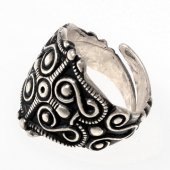 Jewellery in the Baroque period was strongly influenced by French influences, in particular by the reign of the so-called ‘Sun King’ Louis XIV. Jewellery was now largely deprived of its practical function and served almost exclusively for representative purposes.
For this reason, Baroque jewellery was also extremely opulent and precious. Floral patterns and figurative compositions were particularly popular during this period.
The majority of noblewomen also developed a special fondness for diamonds, which were particularly valuable and striking due to their ‘fire’.
 Victorian jewellery
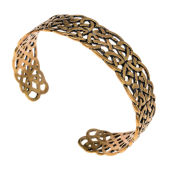 For centuries, until well into modern times, it was mainly people from the upper social classes who could afford precious jewellery made from expensive precious metals and gemstones. However, with the advent of new techniques for jewellery production, it finally became possible for less wealthy people to wear synthetically produced gemstones, which led to a sharp increase in jewellery production.
In addition to gemstones, there was also a growing interest in gold jewellery among the population, with motifs mainly derived from the animal and plant world.
Historical-style jewellery, which harked back to bygone eras, also became fashionable again, with numerous themes from Greek, Roman and Egyptian culture being taken up and incorporated into jewellery for the masses.
In addition to the widely popular brooches and necklaces, women also adorned themselves once again with magnificent hair accessories, especially tiaras.
 Historical jewellery at Pera Peris Webshop
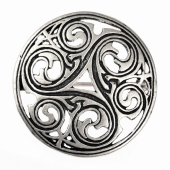 We hope you enjoyed this little excursion into the jewellery of the past and that you will find a piece of jewellery to suit your taste in our shop.
At Pera Peris - House of History, you are sure to find replicas of historical jewellery to match your outfit, such as medieval fibulae, brooches and clasp pins and other garment fasteners based on historical originals and archaeological finds.
In our medieval shop, you can also buy garment pins and ring pins made of bronze and bone based on models from the Roman and Viking periods.
In our online shop, you will find authentic pendants and magical amulets, as well as replicas of Celtic torques and Viking neck rings, and other Viking jewellery such as historical bracelets, finger rings and earrings. You are sure to find the right medieval or Viking jewellery for a stylish and authentic outfit.





 Shopping cart


