


 Shopping cart


Medieval belts, bodices and girdles for LARP, medieval or Viking re-enactment
Here you find a large selection of medieval and Viking belts made from leather.Continue ...
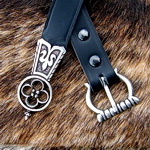 At Pera Peris medieval shop you can buy a wide variety of high-quality medieval belts. Our authentic Viking and medieval belts are equipped with detailed replicas of historical buckles, strap ends and belt fittings attached to solid belt straps made of high-quality cowhide leather. In addition to these particularly long medieval belts for knotted wearing, we also offer laced bodices or bodice belts in the style of the late Middle Ages and the Renaissance in our online shop. We are certain that you will find the right medieval belt for your re-enactment or a solid leather belt for everyday use.


Retailers for LARP or medieval re-enactment are welcome to register for our medieval wholesale store.
Categories
-
Up to early Middle Ages
 Leather belts after historical models from the Antiquity to the early Middle Ages
 -
Viking Belts
 Viking belts with replicas of historical buckles, studs and strap end fittings
 -
Medieval Belts
 Leather belts for medieval re-enactment of the period from 1000 to 1500 AD
 -
Belts with Iron Buckle
 Historic leather belts with hand forged iron buckles for Medieval -Reenactment.
 -
LARP-Belts
 LARP-leather belts with buckles in the style of the Celts, Vikings and the Middle Ages
 -
Bodice-Belts
 Bodice belts from leather for the historic garb in LARP and Medieval re-enactment
 -
Buckle Belts
 Quality leather belts with historical motifs of the Celts, Vikings and the Middle Ages
 -
Classic Belts
 Solid leather belts in classic style for everyday wear, LARP and Medieval garb.
Dealers for museum supplies, medieval and Viking re-enactment or LARP are cordially invited to register as retailer for wholesale in Pera Peri's medieval shop. We guarantee the best quality at good prices with short delivery times!
Popular Products
-
 Pirate Bodice Belt - XS + 3XL42,01 €*Quick Order
 -
 Broad bodice belt with Lacing / XS - 3XL35,29 €*Quick Order
 -
 Mercenary Belt - 5 cm29,40 €*Quick Order
 -
 Bodice Belt "Maidservant" / XS - 3XL33,61 €*Quick Order
 -
 Borre Style Viking Belt - 1.5 cm / with strap end23,52 €*Quick Order
 -
 Wolf Head Belt - 3 cm21,00 €*Quick Order
 -
 Viking Leather Belt - 3 cm / strap end + studs46,21 €*Quick Order
New Articles
show 1 to 28 (out of a total of 211 articles)


